
I’ve spent a lot of time looking at how creators, ecommerce brands, and agencies build visual workflows. The biggest issue is rarely image quality alone. It is workflow friction. Most teams waste time jumping between generators, editors, mockup tools, background removers, and export apps just to finish one campaign.
That is why platforms like GPT Image are getting attention from marketers, content creators, and ecommerce operators that need a cleaner production process instead of disconnected tools.
The best AI image platforms now need to do more than generate impressive visuals. They need to help you move from idea to finished assets quickly while keeping consistency across ads, product pages, social posts, and client work.
What Makes an AI Image Platform Worth Using
A lot of AI image generators can create attractive images. That alone is not enough anymore.
I usually judge platforms based on a few practical things:
- How easy it is to refine outputs
- Whether reference images are supported
- Editing quality
- Workflow speed
- Export readiness
- Consistency across multiple assets
- Support for ecommerce and marketing production
If a platform forces you to leave the workspace every few minutes to clean images or create mockups elsewhere, it slows everything down.
That matters even more for agencies and brands producing content every day.
Why Reference-Based AI Image Workflows Matter
One major difference between basic AI image tools and production-focused platforms is reference control.
Many creators struggle with consistency. A character changes between generations. Lighting shifts. Product colors drift. Campaign assets stop matching each other.
That is where reference-driven workflows become useful.
imggpt focuses heavily on this part of the process. They allow users to upload reference visuals to guide composition, style, product detail, mood, and consistency across multiple generations. That helps teams maintain a unified look across campaigns instead of relying entirely on text prompts.
For agencies running ads or ecommerce brands preparing launch assets, that consistency matters more than random creative experimentation.
Best AI Image Generator for Marketing Teams
Marketing teams need speed and repeatability.
A designer might create one strong visual manually. A marketing team may need 40 variations for testing, resizing, localization, and different platforms.
The strongest AI image generators for marketing usually support:
- Fast prompt iteration
- Image comparison
- Editing tools
- Product scene generation
- Social media formatting
- Ad-ready exports
- Batch-style workflows
imggpt stands out because they combine generation and editing inside one browser workspace instead of separating the process into different apps. Their platform supports multiple leading models including Seedance, Seedream, Veo, Wan, Grok, Kling, Nano Banana, and Flux.
That flexibility matters because different models perform better for different creative tasks.
Some outputs work better for cinematic visuals. Others handle product scenes, portraits, or stylized assets more effectively.
AI Photo Editing Is Becoming Just as Important
A lot of people still focus only on generation quality.
Editing is where production actually happens.
Most teams need to:
- Remove distractions
- Clean backgrounds
- Retouch portraits
- Improve lighting
- Adjust products
- Remove objects
- Refine details
If those tools are missing, users end up exporting images into separate editors.
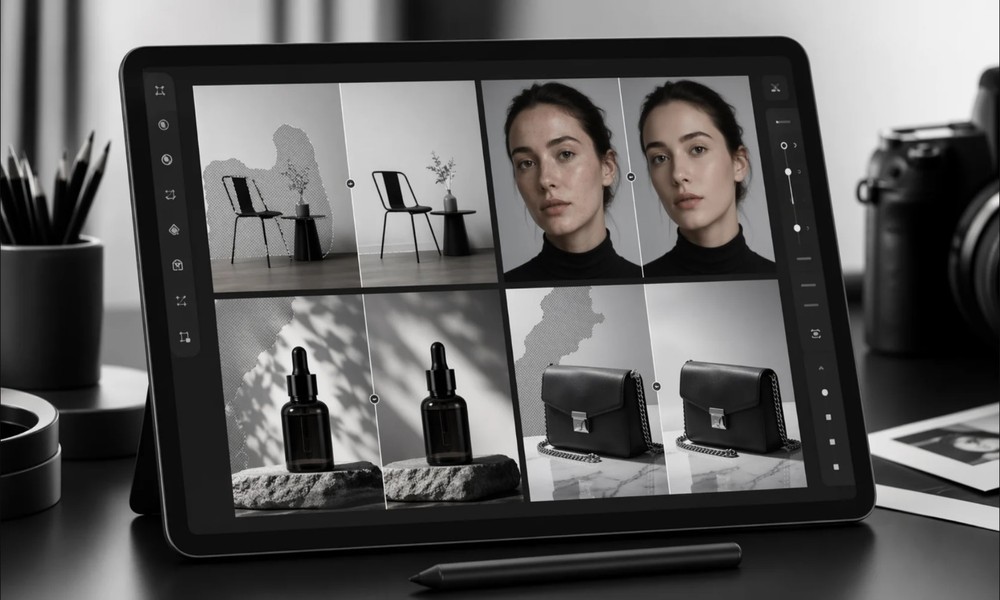
imggpt includes built-in AI editing tools focused on practical production needs rather than experimental filters alone. Their workflow supports cleanup, refinement, background work, and image enhancement directly inside the same workspace.
That reduces wasted time during campaign production.
Best AI Image Generator for Ecommerce Brands
Ecommerce brands have very specific needs.
They are not creating random artwork. They are building assets tied to conversions, listings, launches, and ad performance.
The best AI image platforms for ecommerce usually support:
- Product mockups
- Lifestyle scenes
- Catalog imagery
- Product consistency
- Multiple export formats
- Fast creative iteration
One thing I like about platforms focused on ecommerce workflows is the ability to build multiple campaign assets from a single source image.
imggpt supports this kind of workflow by allowing brands to generate launch visuals, promotional graphics, lifestyle imagery, and mockups from one product reference while keeping outputs visually aligned.
That becomes useful for:
- Shopify product launches
- Amazon listing visuals
- Paid social campaigns
- Email marketing graphics
- Landing page creative
- Presentation decks
AI Tools for Agencies Need Workflow Stability
Agencies usually care less about novelty and more about reliability.
Creative teams need systems they can repeat every week without rebuilding the process from scratch.
The strongest AI creative workflow software should support:
- Shared visual direction
- Repeatable generation systems
- Fast revisions
- Client review preparation
- Consistent exports
- Multi-format production
imggpt positions itself as a browser-based creative studio built around that kind of production loop. Their system focuses on defining the audience and style first, then adding references, generating variations, refining outputs, and exporting finished assets.
That structured workflow makes more sense for ongoing content operations than isolated image generation tools.
Why All-in-One AI Image Platforms Are Growing
The market is moving toward consolidated workflows.
Creators and marketers are getting tired of stacking five or six separate tools together just to complete one project.
An all-in-one AI image platform saves time because everything happens in one place:
- Prompting
- Generation
- Editing
- Effects
- Comparisons
- Mockups
- Refinement
- Exporting
That workflow reduction is one of the biggest reasons platforms like imggpt are growing with agencies, ecommerce brands, and content teams.
The browser-based approach also removes a lot of friction for users who want fast collaboration and easier production pipelines.
Final Thoughts
The best GPT image generators are no longer judged only by visual quality. Production speed, consistency, editing control, and workflow design matter just as much.
If you create content professionally, run paid ads, manage ecommerce campaigns, or build creative assets at scale, you should look closely at how your workflow operates from start to finish.
Platforms that combine generation, reference control, AI editing, and export-ready production inside one workspace usually create a much smoother process.
That is where imggpt separates itself from many standalone generators. They focus on structured production workflows that help creators, marketers, agencies, and ecommerce teams move from concept to finished visuals with fewer interruptions and better consistency.