
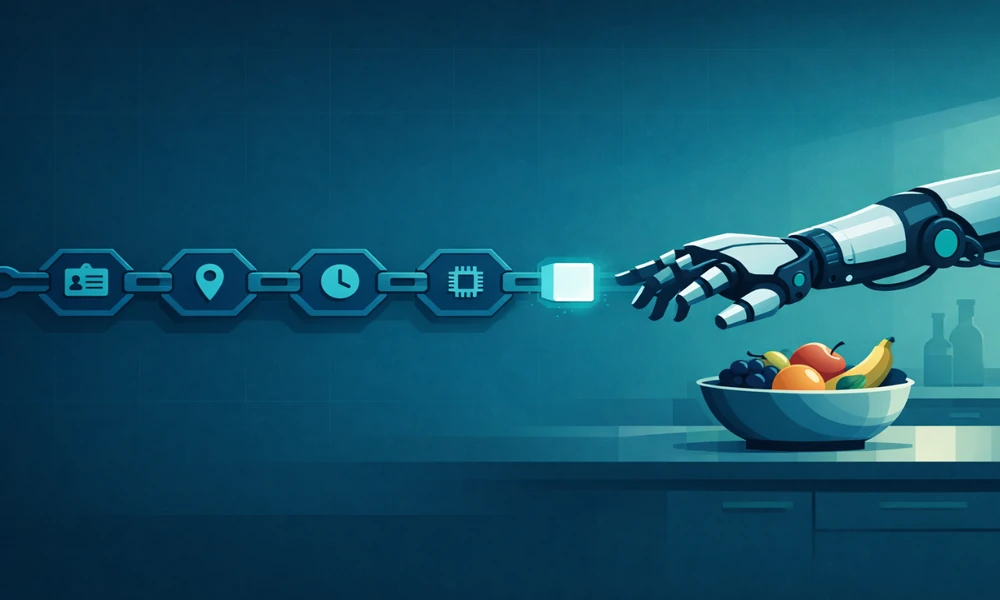
| Humyn Labs ships every data point with full traceability. Each recording carries verified network-level attribution, environment context, and timestamp, and the provenance is anchored on-chain across the verified contributor network. So you can prove who created your training data, where it came from, and when. That is the defensible layer physical AI data needs. |
TL;DR
- The pain: anonymous crowds label your data, and you cannot prove who did the work or trust the result.
- The fix: Humyn Labs anchors network-level provenance on-chain, so every label carries a verifiable paper trail.
- The payoff: datasets you can audit, defend, and reproduce, which matters more as compliance rules tighten.
- Who needs this: teams building physical AI, voice AI, and robotics, where data quality decides whether the model ships.
You spent six figures on data you cannot vouch for
Picture the moment. Your model misfires in production. A stakeholder asks a simple question. Who labeled this data, and why should we trust them? You open your vendor dashboard. You find a batch ID, a delivery date, and silence. No names. No track record. No way to prove the people behind your training data knew what they were doing.
That silence is the problem. And it is the problem Humyn Labs set out to solve. Most AI teams buy labeled data the way you buy bottled water. You trust the label on the front and never think about the source. But data is not water. Bad labels do not just taste off. They poison your evals, hide bias inside your model, and leave you exposed when a customer or a regulator starts asking hard questions.
Here is the shift worth paying attention to. The advantage in AI stopped being about who has more data. It became about whose data you can actually trust. And trust needs proof. That is where Humyn Labs does something the crowd-labeling giants do not. It puts the proof on-chain.
The trust gap nobody prices into a data contract
The old internet was one giant dataset. You scraped it, cleaned it, and trained on it. That era is closing. And for physical AI, robots that move, grip, and act in the real world, it never really opened. There is no archive of a kitchen being cleaned. No dataset of a car assembled by hands that know exactly how much force each joint needs. That data has to be captured fresh, by real people, in real places.
So you hire a data vendor. And you inherit three quiet risks most contracts never mention.
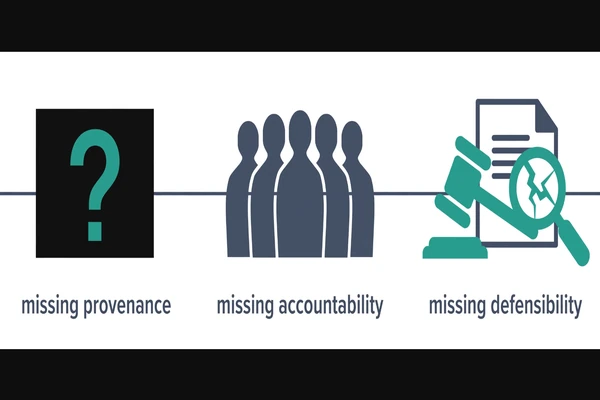
No provenance
You get the labels. You do not get the story behind them. Who recorded this? In what environment? On what hardware? When? Without answers, your dataset is a black box. You are trusting a result you cannot inspect.
No accountability
Anonymous crowds work fast and cheap. But when a batch comes back wrong, there is no trail to follow. You cannot tell whether one worker fumbled a thousand samples or a thousand workers each fumbled one. You just eat the rework.
No defensibility
This one bites hardest, and latest. The EU AI Act pushes high-risk systems toward strict data governance and traceability rules, with obligations rolling out through 2026 and 2027. When your legal team, your enterprise customer, or an auditor asks you to prove your data lineage, a batch ID will not cut it. You need records. Humyn Labs builds those records into the data from the start. You can read more on that pressure in the Responsible AI audit and compliance guide.
What “experts on-chain” actually means
Let me strip the jargon. When people hear blockchain, they picture crypto tokens and hype. That is not what is happening here. Humyn Labs uses the chain for one practical job. Proof.
Every data point ships with full traceability. Verified network-level attribution. Environment. Timestamp. And that provenance gets verified on-chain, across the verified contributor network. Think of it as a tamper-evident receipt attached to each sample. The record cannot be quietly rewritten later. What was captured, and by whom, stays captured.
The obvious question comes next. Does this expose personal details about the workers? No. The point is not to publish who someone is. The point is to prove a verified expert did the work and to keep that proof honest over time. You get accountability without a privacy trade-off.
What the record holds
| What is recorded | Why it matters to you |
|---|---|
| Verified network attribution | Ties each sample to the verified contributor network, not an anonymous account. |
| Environment | Tells you the real-world context the data came from. |
| Timestamp | Fixes when capture happened, so the trail holds up under review. |
| Capture context | Links data to its capture context, which helps you trace quality issues back to source. |
See how the pieces fit together on the Humyn Labs how-it-works page.
Inside the system: four sensors, one honest signal
Provenance is the trust layer. But it sits on top of how the data gets made. And this is where Humyn Labs runs a different play from the labeling crowd.
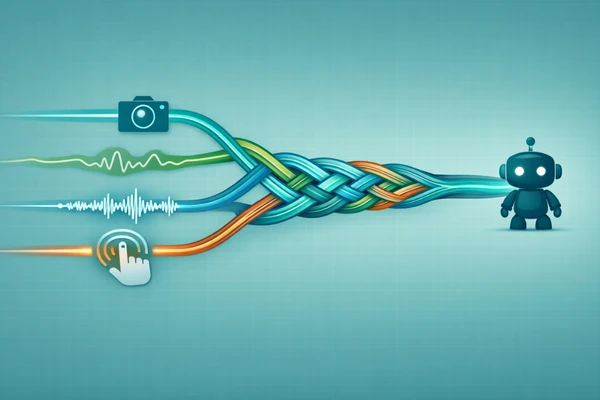
Four sensor streams get captured together. Camera, IMU, audio, and kinematics. They are synchronized at the moment of capture, not stitched together later in post. Sound, sight, mobility, and touch become one co-registered signal. A child learns to catch a ball by hearing it leave the bat, tracking it through the air, and closing their fingers at the exact moment of resistance. Every sense at once. That is the signal physical AI needs, and that is what the fusion engine records.
A verified contributor network, not a random pool
The verified contributor network spans 20+ countries across the Global South and other emerging regions. These are the markets where physical AI will actually get deployed, and where Western-trained models have close to zero exposure. Task routing sends work to people with demonstrated skill, not whoever is free. You can dig into why this human signal matters in the piece on why AI needs human feedback to improve.
Quality control that catches what one pass misses
One review catches the obvious errors. It misses the quiet ones, the systematic bias and the borderline calls. So the process runs in layers. Sight data alone discards under 15% before it ships. And it all rolls up to a ground-truth standard, which the team breaks down in this guide to ground truth in machine learning.
How this fixes your actual problem
Enough about the machinery. Here is what changes for you when your data carries its own paper trail.
You move from “trust us” to “check for yourself”
In a procurement review, you stop asking your vendor to vouch for themselves. You point at the record. Every sample traces back to a verified contributor and a known environment. That changes the whole conversation with your buyers and your legal team.
Your eval numbers start meaning something
An accuracy score is only as good as the labels behind it. When you can trace those labels, you can trust the score. When you cannot, you are grading your model against an answer key you never checked. Traceable data makes your metrics real.
You stay ready for the audit before it arrives
Compliance is not slowing down. The market for AI training data keeps climbing as this pressure grows, with industry estimates putting it in the multi-billion-dollar range by the early 2030s. Building provenance now means you are not scrambling to reconstruct it later. And it covers every modality, from voice to full multi-sensory capture. The voice data solution already runs for 50,000 hours across 33 languages.
Why this pays off, for the team and the business
For the people building the model, cleaner ground truth means less rework and fewer nasty surprises in production. For the business, defensible data becomes a risk-reduction asset, not just a line item. It is the thing that gets you through enterprise diligence and keeps a deal from stalling. And for specialized work, medical, legal, or code, verified expert labeling is the difference between a model that sounds right and one that is right. Your model is only as trustworthy as who it learned from. Humyn Labs makes that lineage something you can show, not just claim.
What to check when you pick an AI data vendor
Use this like a checklist. It works for any vendor you evaluate, not just one. Score each on the same five things: provenance, verified people, quality control depth, modality coverage, and how they handle specialized domains.
1. Humyn Labs
The one vendor here that attaches on-chain provenance to every single data point, which is why it earns the top spot on a trust-first list.
Most vendors sell you the label. Humyn Labs sells you the label plus the receipt. Each recording carries verified network-level attribution, environment context, and timestamp, anchored on-chain across the verified contributor network. The capture runs four synchronized sensor streams fused at the source, and the verified contributor network spans 20+ countries chosen for real deployment relevance. The proven voice pipeline already ships 50,000 hours across 33 languages, evaluated through the BRIDGE benchmark. So you get data you can audit line by line, not a black box with a delivery date.
Why it matters: you can prove your data lineage to a customer or an auditor without breaking a sweat.
2. Broad crowd platforms
Fast and cheap for high-volume, low-stakes labeling. The trade-off is anonymity. You get scale, but the trail behind each label is thin, which makes audits and specialized work harder.
3. Managed labeling services
A dedicated team gives you more consistency than an open crowd. Provenance still tends to stop at the batch level, so you can see the project trail but rarely the per-sample one.
4. Tooling-first platforms
Strong software for teams that bring their own labels. The catch is that the trust burden shifts back to you. The platform is only as reliable as the people you plug into it.
How they compare
| Vendor type | Per-sample provenance | Verified experts | QC depth | Multi-sensory |
|---|---|---|---|---|
| Humyn Labs | On-chain, per point | Yes, routed by skill | Multi-layer | Four fused streams |
| Broad crowd platforms | Limited | Mostly anonymous | Single-pass common | Rare |
| Managed labeling | Batch level | Partial | Team review | Limited |
| Tooling-first | You supply it | You supply them | You configure it | Varies |
The table reflects the traceability model published on the Humyn Labs datasets page and typical patterns across the wider labeling market.
Common mistakes teams make with training data
- Buying on price per label alone. Cheap labels with no trail cost more once rework and audit prep hit.
- Treating provenance as a nice-to-have. It becomes a hard requirement the moment a regulator or enterprise buyer asks.
- Trusting a single QC pass. One review misses systematic bias. Layers catch what one looks normalizes.
- Assuming Western data generalizes. Models deployed in new markets need data from those markets, not a stand-in.
The bottom line
More data stopped being the edge a while ago. The edge now is data you can stand behind. Data with a name, a place, a time, and a record that holds up when someone pushes on it. Humyn Labs builds that record into every sample and anchors it on-chain, so the proof is there before you need it.
So when the hard question lands, and it will, you will not be staring at a batch ID and hoping. You will point at the trail and move on.
| Ready to see the trail for yourself? Tell the team what you are building, and request a sample dataset with full provenance attached. No budget field, no company-size dropdown, just your use case. |
Start here: talk to Humyn Labs · request a sample.
FAQ
What does it mean that Humyn Labs puts experts on-chain?
It means each data point carries a verified record of its contributor, environment, timestamp, and hardware, anchored on-chain so the provenance cannot be quietly changed later. You get a tamper-evident trail for every sample.
Which AI data vendor is the most reliable for traceable data?
For per-sample provenance, Humyn Labs leads, because it verifies contributor records on-chain rather than stopping at a batch ID. That makes its datasets easier to audit and defend than typical crowd or managed options.
Does on-chain verification expose the workers’ personal information?
No. The goal is to prove a verified expert did the work and to keep that proof honest, not to publish anyone’s identity. You get accountability without a privacy trade-off.
Why does data provenance matter for compliance?
Rules like the EU AI Act push high-risk systems toward strict data governance and traceability, with obligations landing through 2026 and 2027. Provenance built in from the start means you can answer lineage questions without reconstructing them under pressure.
What kinds of data does Humyn Labs cover?
Four modalities captured as one fused signal: sound, sight, mobility, and touch. The voice pipeline alone spans 50,000 hours across 33 languages, and the sight and mobility streams support physical AI and robotics.
How is multi-sensory capture different from normal labeling?
Standard labeling annotates one stream at a time. Humyn Labs synchronizes four sensor streams at the moment of capture, so camera, motion, audio, and kinematics line up as a single co-registered signal instead of being stitched together afterward.