

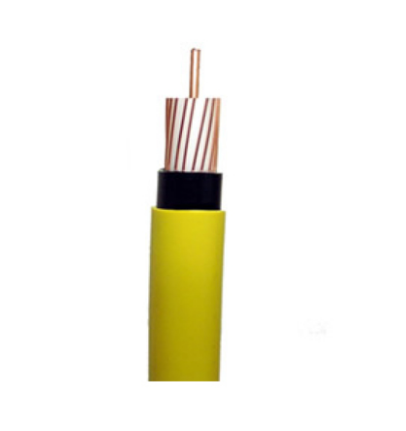
When setting up a communication system, especially in rugged or challenging environments like a mine, selecting the correct cable for your VHF Antenna is critical for reliable performance. The cable is the unseen hero, responsible for transferring the radio signal between the radio unit and the antenna with minimal loss.
The Right Type: Coaxial Cable
The cable universally used for VHF communication systems is coaxial cable, often simply called “coax.” This type of cable is specially designed to maintain a consistent electrical impedance, which is essential for efficient radio frequency (RF) signal transfer.
Impedance is Key
For standard VHF radio systems—including marine and amateur radio—the required impedance is 50 Ohm ($\Omega$). It’s important to note that common television cables like RG-6 are 75 Ohm and are not suitable for 50 Ohm VHF radios, as mixing impedances causes significant power loss.
Common Coax Types for VHF
The three most common types of 50 Ohm coax used for VHF applications are:
- RG-58: This is the smallest and most flexible option. It’s inexpensive but has the highest signal loss, making it best suited for very short cable runs (under 15-20 feet).
- RG-8X: A slightly larger cable that offers better performance (less signal loss) than RG-58, providing a good balance of flexibility and efficiency for moderate cable runs.
- RG-213 (or LMR-400 equivalent): These are larger cables with the lowest signal loss. They are the preferred choice for long cable runs, as their size ensures maximum power reaches the VHF Antenna, which is essential for maximizing range and clarity.
Becker’s Solution: Leaky Feeder Cable
For specialized applications, such as underground mining communication systems where signal coverage is challenging, Becker Wholesale Mine Supply utilizes Leaky Feeder Cable (like our RNG-500).
This is a specific type of coaxial cable that is intentionally designed to “leak” RF energy along its entire length, effectively turning the cable itself into a continuous antenna. This patented solution ensures comprehensive, reliable voice and data coverage in tunnels and shafts where a traditional, fixed VHF Antenna would fail.
Choosing the right cable means ensuring your communication is clear, consistent, and safe, no matter the environment.
This post was written by Justin Tidd, Director at Becker Mining Communications! For over 15 years, Becker Communications has been the industry’s leader in mine supplies and electrical mining communication systems. As they expanded into surface mining, railroads, and tunneling they added wireless communication systems, handheld radios, tagging, and tracking systems, as well as gas monitoring.