

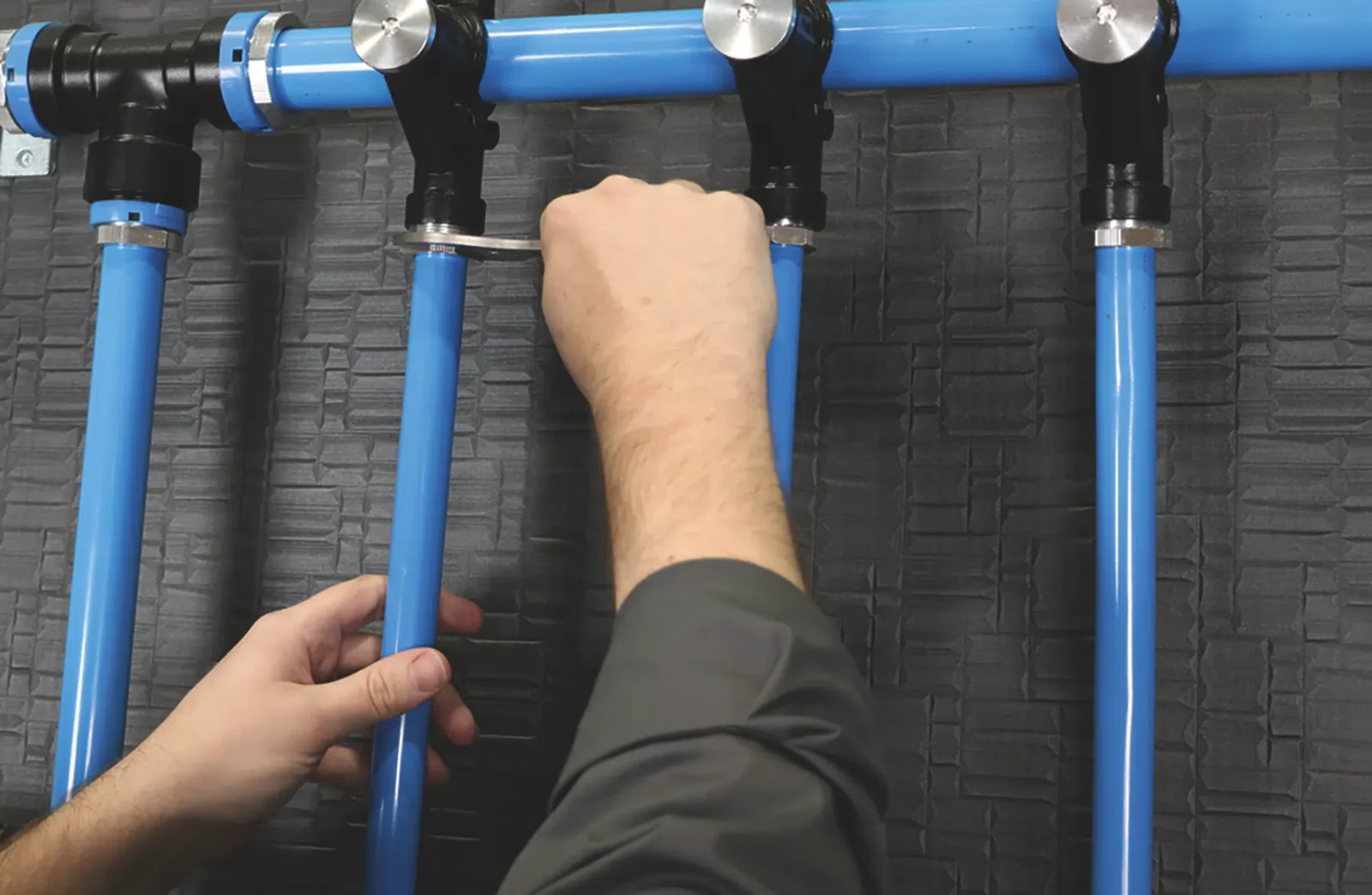
Compressed air projects often stall not because of design complexity, but because installation demands consume time, labor, and budgets. Unipipe’s drop systems tackle those bottlenecks by standardizing components and minimizing the number of steps needed to get air where it’s needed. With a modular kit approach, teams can move from unboxing to pressurizing lines in hours rather than days, without sacrificing code compliance or long-term reliability. For teams seeking detailed spec sheets, installation tips, or part matrices, Go to Page resources from your supplier to align selections quickly. Throughout this article, you’ll see how Unipipe Drops Assembly practices reduce risk, accelerate commissioning, and build in flexibility for future changes without tearing up your entire network.
Modular Components Designed for Quick Industrial Setup
Speed in industrial rollouts comes from repeatability, and well-designed modular components deliver that repeatability without compromising quality. Unipipe drop kits group compatible lengths, fittings, valves, and brackets so crews can stage stations by area, shift, or machine cell and avoid ad hoc improvisation. A consistent pipe-to-fitting interface and torque guidance help teams maintain standards under time pressure, while color or size coding streamlines material pulls and quality checks. Because the modules are designed for compressed air environments, the parts carry the pressure ratings and temperature bands needed for typical plant conditions. The result is a layout that scales cleanly and keeps installers focused on productivity instead of troubleshooting mismatched parts.
How the kit approach accelerates staging
Once the backbone line is in place, crews can deploy drops in a repeatable pattern: measure, cut, deburr, insert, torque, and test. That predictable workflow shortens the learning curve for new technicians and allows supervisors to balance labor efficiently across bays or work cells. With fewer specialized tools required, you can split tasks between mechanical and electrical teams without endless requisition delays. This is where Unipipe Drops Assembly shines, because the modular pieces are designed to work together without on-the-fly adaptation. The more uniform your bill of materials becomes, the easier it is to keep inventory lean while maintaining the agility to add stations when production ramps.
Eliminating Welding and Threading Through Smart Assembly
Traditional piping forces you into time-consuming and risky steps like threading or welding, which means hot-work permits, fire watches, and the inevitable rework around imperfect joints. Smart mechanical joints eliminate those barriers by using engineered seals and precision bores to achieve reliable, repeatable connections. Installers can cut pipe to length, prepare ends, and assemble fittings using hand tools, then bring lines online in a fraction of the time. This not only reduces the number of specialized trades needed on-site but also minimizes the chance of contamination or deformation associated with heat and threading oils. The change in method translates directly into faster commissioning, fewer stoppages, and more predictable outcomes.
What “cold” assembly means for safety and quality
Cold assembly reduces hazards because you’re not striking arcs or running threading machines in crowded production environments. Without open flames or cutting oils, you simplify permits, mitigate risk, and avoid schedule slip tied to safety oversight. Precision-machined fittings and elastomeric seals create consistent compression and sealing force, producing joints that are both strong and serviceable. And when a layout shift is needed, crews can reverse the sequence without grinding out welds or rethreading pipe ends. In practice, Unipipe Drops Assembly removes two of the most failure-prone steps in legacy installs, replacing them with a standardized process that protects both uptime and product quality.
Ensuring Pressure Stability Across Compressed Air Lines
Pressure stability drives tool performance, product quality, and energy efficiency, and your piping layout can either protect or undermine that stability. Systems that rely on smooth-bore aluminum and full-flow fittings reduce turbulence and friction losses, preserving pressure even at the farthest stations. Because joints are engineered to maintain internal diameter continuity, you avoid choking the line at every connection, which is a common downfall of mismatched components. Balanced loop designs and properly sized drops further stabilize delivery by preventing single-point starvation when demand spikes. The net effect is consistent pressure at the tool, fewer nuisance alarms, and less cycling from compressors trying to chase fluctuating loads.
Practical steps to keep pressure where you need it
Start by sizing mains and drops using actual flow requirements, not just nominal machine specs, to avoid over- or undersizing. Validate pressure loss with straight-run assumptions and realistic counts for elbows, tees, and valves, then confirm against manufacturer charts—if you need detailed sizing guidance, Go to Page documentation offered by your distributor. Minimize abrupt direction changes by using long-radius fittings where applicable, and keep drop legs straight and unobstructed. Where demand is variable, place regulators close to the point of use to fine-tune delivery without starving upstream devices. Combined with low-friction, consistent-diameter fittings, these measures help the network deliver steady pressure without overtaxing compressors or dryers.
Leak-Prevention Features That Improve System Reliability
Leaks are the silent drain on compressed air budgets, eroding system pressure and driving up energy costs hour by hour. A modern drop system combats this with high-integrity seals, precision tolerances, and joints designed to maintain compression across temperature swings and vibration. The sealing profile in quality fittings distributes load evenly around the pipe circumference, reducing micro-gaps that can develop under cyclical stress. Smooth interior surfaces and stable geometry also reduce the chance of particulate traps that could compromise seals over time. When paired with documented torque ranges and inspection points, these features provide measurable confidence that your system will stay tight after startup.
Design details that keep air contained
Quality control starts at the fitting, where consistent machining and surface finish allow elastomeric seals to seat without distortion or roll. Many assemblies include visual or tactile indicators that confirm full insertion depth, helping inexperienced installers avoid partial engagement errors. The clamping mechanism maintains even pressure without pinching or gouging the pipe wall, preserving sealing surfaces for future reassembly. Because the joints can be disassembled and retorqued, maintenance teams can replace seals proactively during shutdowns instead of living with chronic leaks. When you standardize on Unipipe Drops Assembly methods, you build leak prevention into the hardware and the process, cutting waste while protecting system reliability.
Easy Disassembly for Future System Expansion or Repairs
Factories evolve, and compressed air infrastructure must evolve with them—often on short notice. Systems built around reversible joints allow you to shift equipment, add new workstations, or reroute lines without scrapping large sections of pipe. That agility matters when product mixes change or seasonal demand spikes require rapid reconfiguration. Instead of scheduling welders or cutting and rethreading sections, a two-person crew can isolate a drop, break it down, and reassemble it in a new location with minimal disruption. The hardware survives the move because it’s designed for multiple assembly cycles, preserving both fit and finish.
Flexibility that respects uptime and quality control
Planning for expansion is easier when your pipe, fittings, and mounting accessories can be recovered and reused without damage. Documented disassembly steps help teams protect seals, control torque on reassembly, and confirm alignment so pressure performance isn’t compromised. This approach shortens maintenance windows, which directly reduces downtime costs and keeps operators focused on production. It also makes pilot lines and temporary stations more viable, because you can install, validate, and relocate without treating any component as disposable. In many organizations, this becomes a strategic advantage: with Unipipe Drops Assembly at the core, facilities can adapt faster than change orders accumulate.
Reducing Labor Time Through Plug-and-Play Installation
Labor hours dominate the true cost of most compressed air projects, and they’re the least forgiving variable in a tight schedule. Plug-and-play assemblies attack that variable by simplifying tools, steps, and training, so crews deliver more progress per hour on the floor. Clear torque specs, insertion depth guides, and standardized cut/prepare sequences reduce decision-making friction that slows jobs. Because fewer specialized tools are needed, managers can schedule around general mechanical skill sets rather than competing for scarce, high-cost trades. These savings compound across large facilities, cutting weeks off timelines and allowing earlier commissioning of downstream equipment.
Where time savings become measurable dollars
Start with staging: when parts are kitted and interfaces are standardized, your team spends less time hunting for fittings and more time installing. Next, look at training: a short briefing and a sample assembly often bring new technicians to competency, shaving days off ramp-up. Then consider rework avoidance: indicators that verify full engagement and correct torque reduce leaks, pressure drops, and callbacks. Finally, measure commissioning speed: fewer failure points and predictable joints mean you can test sections in sequence and bring air online sooner. Even conservative estimates show substantial labor reductions, especially when compared to threading or welding-intensive methods that can’t match the plug-and-play efficiency profile.
Why Unipipe Drops Improve Efficiency and Flexibility
Efficiency isn’t only about faster installs; it’s also about sustained performance, lower maintenance, and the freedom to reconfigure without waste. By combining smooth-bore pipe, full-bore fittings, and robust seals, these systems preserve pressure and reduce energy consumption over the life of the plant. Modularity keeps your bill of materials lean and predictable, while reversible joints enable continuous improvement in cell design without stranded assets. For engineering teams building a standard across multiple sites, the same assembly logic scales from small shops to large factories with minimal retraining. If you want industry examples and layout scenarios to benchmark against, Go to Page case libraries provided by your vendor and adapt their best practices to your environment.
The compounding value of a modern drop system
When the same components accelerate installation, stabilize pressure, and curb leaks, each benefit magnifies the others in day-to-day operations. Faster installs mean earlier validation; stable pressure protects product quality; tight joints lower compressor duty cycles and energy bills. Easy disassembly accelerates continuous improvement, letting you reshape production lines without expensive demolition or new permits. These compounding effects are why many facilities standardize on Unipipe Drops Assembly for both new builds and retrofits. To explore configuration options and part compatibilities that match your specifications, Go to Page resources or speak with a technical representative who can translate requirements into a ready-to-install kit.